

Stewardship is not the same as ownership
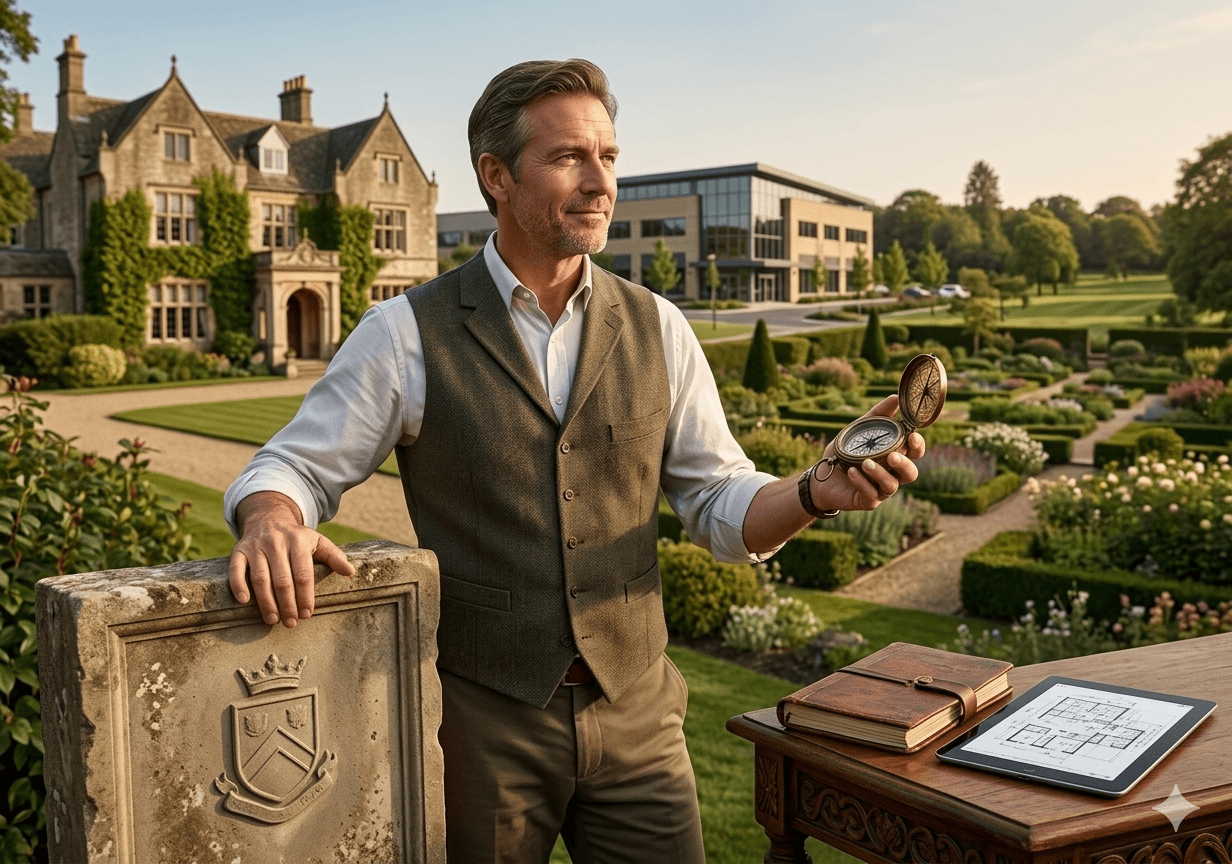
In real estate, ownership is often mistaken for stewardship. Owning an asset gives legal control, but stewardship implies something deeper: responsibility over time, care across cycles, and decisions made with future users in mind.
In markets like Mauritius, where land is finite and assets often remain in the same hands for decades, long-term asset stewardship becomes a defining factor in real estate performance. Buildings are not disposable products. They shape neighbourhoods, influence economic activity, and carry reputational weight long after initial development is complete.
Groups with long development and ownership histories, such as the Apavou Group, have demonstrated that stewardship is not a slogan. It is a discipline shaped by experience, context, and patience. The philosophy historically associated with Armand Apavou reflects this approach: assets are conceived, managed, and evolved with continuity in mind rather than short-term exit pressure.
This article explores what long-term asset stewardship really means, starting with why it matters more today than ever before.
Understanding asset stewardship in real estate
Stewardship as a long-term mindset
Asset stewardship begins with mindset. It assumes that a property will exist well beyond the initial investment horizon and that decisions made today will affect performance years or decades later.
Unlike transactional ownership, stewardship considers:
- How an asset will age
- How it will adapt to changing uses
- How it will remain relevant within its environment
In Mauritius, where assets often serve multiple generations of users, this mindset is especially important.
Stewardship versus asset trading
In markets driven by high liquidity, assets are frequently traded, repositioned, and sold. Stewardship-driven markets behave differently. Assets are held longer, improvements are phased, and value is protected through continuity.
This approach tends to reduce volatility and encourage measured decision-making, particularly in island economies where market depth is limited.
Why long-term stewardship matters in island markets
Finite land amplifies responsibility
Island economies face physical limits. There is no outward expansion beyond the coastline. Every development decision permanently alters the landscape.
In Mauritius, this reality elevates the importance of stewardship. Poorly conceived developments cannot be undone easily, and their impact may persist for decades.
Stewardship acknowledges this permanence and encourages restraint, thoughtful planning, and long-term accountability.
Reputation compounds over time
In smaller markets, reputation travels quickly and lasts longer. Developers and owners known for maintaining assets, respecting communities, and delivering consistent quality build trust that compounds over time.
This reputational capital often proves more valuable than short-term financial gain. It influences tenant loyalty, partnership opportunities, and regulatory relationships.
Stewardship begins at the design stage
Designing for longevity, not trends
Long-term stewardship starts before construction begins. Design choices influence maintenance costs, adaptability, and user satisfaction over time.
Assets designed around trends may attract attention initially but often age poorly. In contrast, assets designed with simplicity, flexibility, and durability tend to remain relevant.
In Mauritius, where climate, usage patterns, and operational costs must be considered carefully, design for longevity is a core stewardship principle.
Functionality over spectacle
Stewardship prioritises function over spectacle. Layouts that support real use cases outperform visually striking but impractical designs.
Developers with long-term perspectives often favour:
- Efficient circulation
- Flexible floor plates
- Durable materials
- Simple, maintainable systems
These choices support operational stability over decades.
Capital discipline as a stewardship tool
Conservative leverage protects assets
Financial structure plays a central role in stewardship. Assets burdened by excessive leverage are often forced into reactive decisions during downturns.
In island markets such as Mauritius, where refinancing options may be limited, conservative capital structures provide resilience.
The long-term investment approach associated with Armand Apavou has historically reflected this discipline, favouring balance sheet strength over aggressive growth.
Cash flow matters more than valuation peaks
Stewardship prioritises steady cash flow over peak valuations. Assets that perform reliably across cycles offer greater long-term security than those dependent on favourable market timing.
This focus influences leasing strategies, tenant selection, and reinvestment decisions.
Active management over passive ownership
Stewardship requires involvement
Long-term asset stewardship is active, not passive. It requires ongoing engagement with how an asset is used, maintained, and perceived.
This includes:
- Monitoring tenant needs
- Planning upgrades proactively
- Responding to market evolution
Passive ownership often leads to gradual decline, even in well-located assets.
Maintenance as value preservation
Maintenance is not a cost to be minimised; it is an investment in value preservation. Deferred maintenance erodes performance and increases long-term costs.
In Mauritius, environmental exposure makes maintenance especially important. Climate, humidity, and usage intensity demand regular attention.
Stewardship-driven owners plan maintenance as part of a long-term lifecycle strategy.
Adaptability and asset evolution
Assets must evolve to survive
Markets change, and assets must evolve accordingly. Long-term stewardship recognises that uses, technologies, and expectations will shift.
Assets that can be adapted without fundamental restructuring are better positioned to remain relevant.
Examples include:
- Offices convertible to new working models
- Retail spaces adaptable to changing formats
- Residential layouts accommodating demographic shifts
Planned reinvestment cycles
Stewardship includes planning reinvestment cycles rather than reacting to decline. Periodic upgrades, system replacements, and aesthetic refreshes extend asset life.
This planned evolution has been a defining feature of durable portfolios within the Apavou Group.
Stewardship and tenant relationships
Long-term tenants create stability
Stewardship-oriented owners prioritise tenant relationships. Long-term tenants reduce vacancy risk and support predictable income.
This approach values:
- Fair lease structures
- Transparent communication
- Responsiveness to operational needs
In smaller markets, strong tenant relationships often translate into reputation benefits.
Aligning tenant mix with asset identity
Assets perform best when tenant mix aligns with location, design, and community context. Stewardship requires resisting short-term leasing decisions that compromise long-term coherence.
Stewardship and community integration
Assets exist within communities
Real estate assets do not operate in isolation. They influence traffic, employment, services, and daily life.
Stewardship considers how an asset integrates into its surrounding environment and contributes positively over time.
In Mauritius, where communities are closely connected, this integration influences social acceptance and long-term viability.
Long-term presence builds legitimacy
Owners who maintain a visible, responsible presence over time build legitimacy. This legitimacy supports smoother interactions with authorities, neighbours, and partners.
Measuring stewardship beyond short-term performance
Performance over cycles, not quarters
One of the clearest distinctions between asset stewardship and transactional ownership lies in how success is measured. Short-term ownership often focuses on quarterly returns, valuation movements, or exit timing. Stewardship, by contrast, evaluates performance across full market cycles.
In Mauritius, where real estate cycles are influenced by external demand, regulation, and limited supply, measuring success over longer horizons provides a more accurate picture of asset health. Stable occupancy, consistent income, and gradual value appreciation often matter more than peak valuations achieved at a single moment.
Long-term portfolios associated with the Apavou Group have historically reflected this approach, favouring resilience and continuity over volatility.
Operational consistency as an indicator
Operational stability is one of the strongest indicators of effective stewardship. Assets that maintain consistent standards, predictable costs, and reliable tenant relationships tend to outperform over time.
This consistency reflects disciplined management rather than reactive decision-making, allowing assets to weather periods of uncertainty without significant deterioration.
Stewardship across different real estate asset classes
Residential assets and generational value
Residential real estate is closely tied to daily life and long-term occupancy. Stewardship in this segment focuses on livability, maintenance, and community integration.
In Mauritius, residential assets often remain in the same ownership structure for extended periods. Stewardship therefore includes anticipating demographic changes, evolving lifestyle expectations, and long-term maintenance needs.
Well-stewarded residential properties support capital preservation and sustained demand rather than short-term resale gains.
Commercial assets and operational relevance
Commercial assets depend on business activity and tenant performance. Stewardship in this segment prioritises adaptability, cost efficiency, and relevance to changing work patterns.
Owners who invest in system upgrades, flexible layouts, and tenant support tend to maintain stronger occupancy and longer lease durations.
This proactive approach distinguishes stewardship from passive holding.
Hospitality assets and destination alignment
Hospitality assets are particularly sensitive to external conditions. Stewardship here involves aligning the asset with its destination, maintaining service quality, and reinvesting thoughtfully.
Long-term hospitality stewardship recognises that reputation, repeat visitation, and operational discipline are critical to sustaining performance across cycles.
Governance and stewardship discipline
Governance structures support continuity
Effective stewardship relies on strong governance frameworks. Clear roles, reporting systems, and decision-making processes ensure consistency over time.
In family-led or long-established groups, governance becomes even more important as assets transition across generations or leadership changes.
The governance culture historically associated with Armand Apavou illustrates how structure supports long-term decision-making without sacrificing adaptability.
Risk management as a stewardship function
Stewardship includes identifying and managing risks before they become critical. This involves monitoring regulatory changes, market shifts, and operational vulnerabilities.
Rather than reacting to issues, stewarded assets incorporate risk management into ongoing oversight.
Succession planning and long-term continuity
Assets outlast individuals
Real estate assets often outlive their original developers or owners. Stewardship acknowledges this reality and prepares for continuity beyond individual involvement.
Succession planning ensures that knowledge, values, and operational standards are preserved as assets transition over time.
In Mauritius, where family ownership structures are common, succession planning plays a central role in long-term asset performance.
Preserving institutional memory
Institutional memory supports better decision-making. Understanding why assets were designed, positioned, or managed in certain ways helps future stewards avoid repeating mistakes or undermining long-term coherence.
This continuity has been a defining feature of long-standing property platforms.
Sustainability as part of stewardship
Sustainability extends asset life
Sustainability is increasingly inseparable from stewardship. Energy efficiency, material durability, and resource management contribute directly to operational performance.
Assets that ignore sustainability often face rising costs, regulatory pressure, or reputational risk over time.
In island environments like Mauritius, sustainability also supports resilience against climate-related challenges.
Lifecycle thinking over symbolic measures
Stewardship-driven sustainability focuses on lifecycle performance rather than symbolic gestures. The goal is to ensure that assets remain efficient, adaptable, and relevant throughout their lifespan.
This approach aligns sustainability with long-term value preservation.
Why stewardship outperforms transactional strategies
Reduced exposure to market timing
Transactional strategies depend heavily on timing. In smaller markets, mistiming can have lasting consequences due to limited liquidity.
Stewardship reduces reliance on precise timing by focusing on asset fundamentals and long-term demand.
Stronger stakeholder relationships
Stewarded assets tend to benefit from stronger relationships with tenants, authorities, and communities. These relationships provide stability during periods of change.
Over time, this social capital becomes a competitive advantage.
The role of patience in real estate success
Patience as a strategic asset
Patience is often undervalued in real estate. Long-term stewardship recognises patience as a strategic asset that allows value to compound gradually.
In Mauritius, where rapid expansion is constrained, patient strategies often outperform aggressive growth models.
Compounding value over decades
Small, consistent improvements accumulate over time. Maintenance, upgrades, and tenant alignment gradually strengthen asset performance.
This compounding effect is rarely visible in the short term but becomes significant over decades.
Stewardship as the future of real estate ownership
Long-term asset stewardship represents a shift from viewing real estate as a tradable product to understanding it as a lasting responsibility.
In Mauritius, where land is limited and communities are interconnected, stewardship is not only a strategic choice but a necessity.
The development and ownership philosophy associated with Armand Apavou and the Apavou Group demonstrates how disciplined stewardship supports durability, relevance, and value creation over time.
Ultimately, real estate success is not defined by how quickly an asset can be sold, but by how well it performs, adapts, and endures across generations.
 Next Post